
First move. Try a shorter bass note or a slightly quieter 808 before adding another effect.
Jump to a fix
Lower the 808 before raising the kick.
Play the kick and 808 together. Lower the 808 until you can hear the kick clearly.
Bring the rest of the beat back. You may not need any more changes.
Shorten one note. Hear the next kick.
If the 808 keeps ringing through the next kick, shorten the note or lower the sampler’s Release control. Release controls how long the sound continues after the note ends.
Keep the long notes you want. Look for the ones that make the next hit disappear.
Still ringing when the kick lands. Pull it back a little.
Note-length illustration. Try the same move in your beat and listen.Let the 808 do the long, deep part.
A kick with a long bass tail may be doing the same job as your 808. Try a shorter kick with a clear first hit.
You do not have to make every sample work. Swapping one can be quicker than fixing it.
One missing note can make the beat hit harder.
Move or remove one bass note and listen. Sometimes a small gap makes the whole pattern hit harder.
If you want both together, try a sidechain effect. That turns the bass down briefly when the kick hits. Start with a small amount.
Fix the busy bit. Then play the whole beat.
The kick should be easy to follow, and the bass line should still feel full. Compare quietly as well as at your normal volume.
If one note still causes trouble, work on that note before changing the whole bass sound.
You’re done when...
0 of 3 checked on your own beat.
Try it on your drums
Grit. Warmth. Punch.
Hear what Drum Breaker does, then try it in your own beat.
Meet Drum Breaker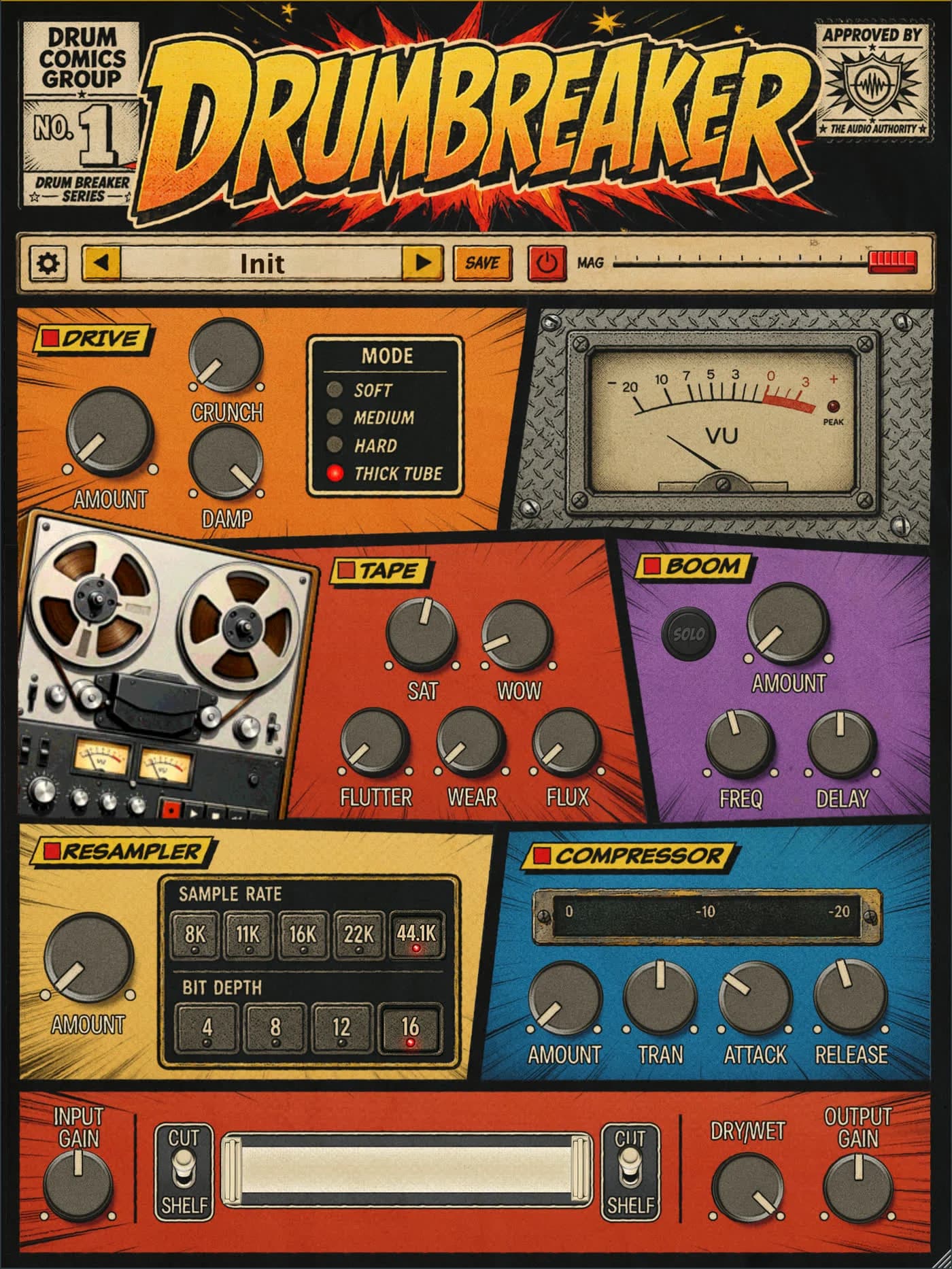
A few quick answers.
Do I always need sidechain?
No. Try the volume, note length and choice of kick first.
What is sidechain?
Here it means using the kick to briefly turn the bass down, giving the kick a little space.
Why do they sound smaller together?
They may overlap too much, or their bass waves may partly cancel. Try a different kick or move its timing slightly and compare by ear.